How to Choose a Trustworthy Private Tutor for Your Child: 7 Signs
8 Aug 2026
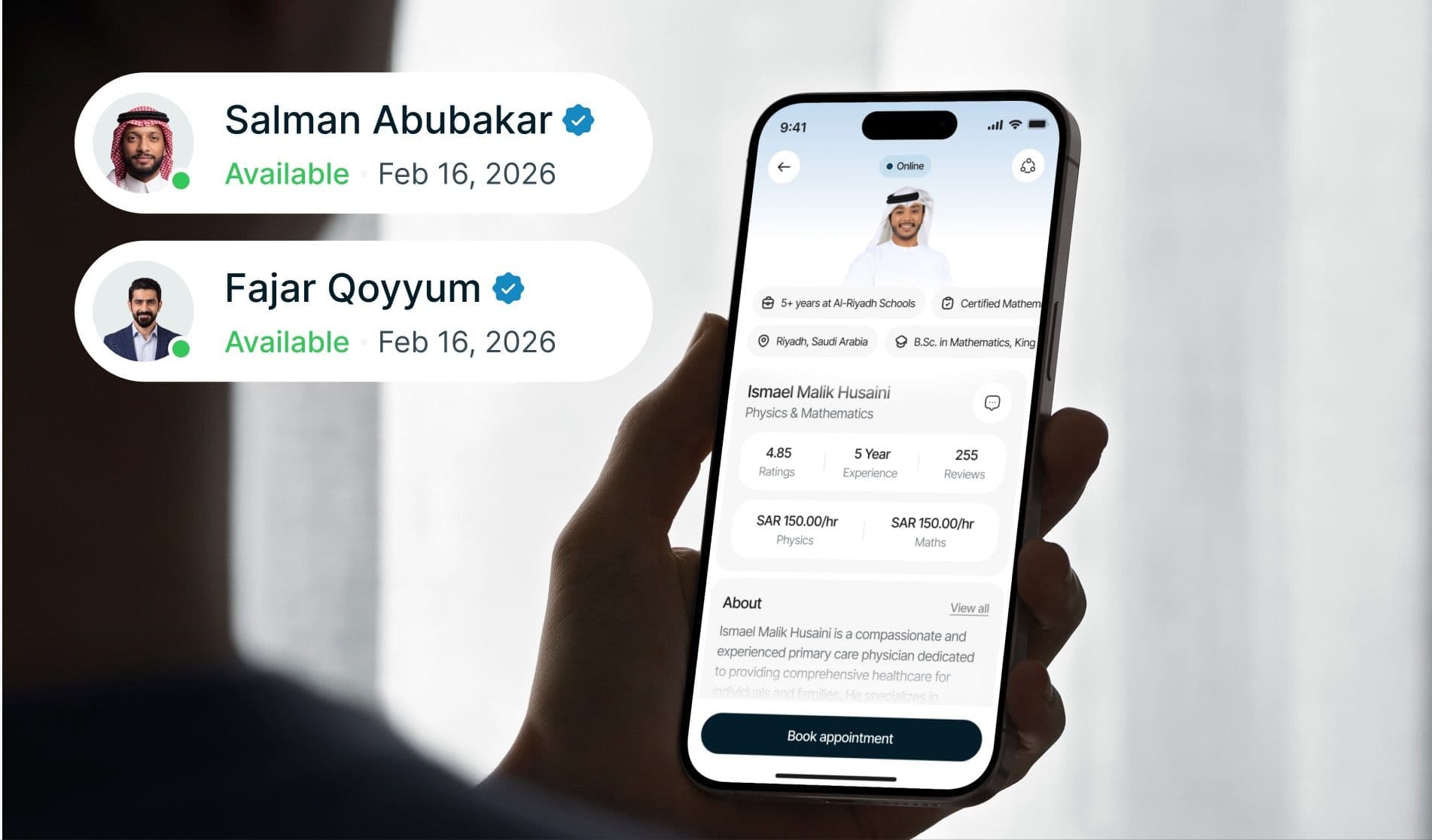
Before the first private lesson, one question occupies parents more than any grade in any subject: who is this person who will be sitting with my child?
It is a completely reasonable question. Choosing a private tutor is not buying a passing service; you are letting a stranger into your home, or leaving your child with them for an hour without direct supervision. And yet many parents settle this decision in a single phone call, on the strength of a recommendation in a WhatsApp group.
The market does not help you. Hundreds of adverts look identical: long experience, engaging style, guaranteed results. Claims that cannot be verified, written by everyone in the same phrasing.
So we have gathered seven practical signs that separate a trustworthy tutor from the rest. Every one of them is something you can verify, not an adjective written in an advert.
Sign one: an officially verified identity
The minimum you should never compromise on: knowing who this person is by their real name and official identity.
In the traditional market that minimum is missing. A mobile number that leads to no name, and a name that cannot be checked. On serious platforms, identity verification is a mandatory step before anything else. On Mualimi, for instance, a tutor does not appear in search results at all before verifying their identity through Nafath, the national digital identity gateway.
The rule here is clear. If you cannot confirm a tutor's identity from an independent source, do not bother with the rest of the list.
Sign two: a qualification that has actually been reviewed
Every advert says specialist tutor. The question is: who reviewed that claim?
A serious tutor is not offended when you ask about their qualification; they welcome the question because it sets them apart. Ask to see the certificate or degree, or choose a platform that reviews qualifications before accepting a tutor at all, rather than approving them automatically.
And there is a difference worth noticing: a qualification in the same field is stronger than a general one. A maths tutor holding a degree in maths or engineering understands the subject at a different depth than someone holding a degree far from it.
Sign three: real reviews from previous families
A word-of-mouth recommendation from someone you trust is valuable, but it is one opinion about one experience.
What you need is a pattern: several reviews, from several families, across a stretch of time. A single review might be a courtesy; twenty accumulated reviews are hard to fake.
And when you read reviews, look for detail rather than stars. A review saying my son improved in physics after two months tells you more than five silent stars.
Sign four: a published, clear price before booking
A trustworthy tutor does not turn the price into a riddle solved at the end of the call.
The absence of a published price is not a small detail. It is the door that surprises come through: a rate that rises mid-term, an extra cost nobody agreed to, or a large gap between what you pay and what your neighbour pays for the same service.
Ask about the full price before the first lesson: the lesson rate, any likely additions, and the cancellation policy. We explain what sets a fair price for your situation in our guide to private tutoring prices in Saudi Arabia.
Sign five: a clear plan for the first lesson
Ask any tutor one question: what will you do in the first lesson?
A capable tutor answers with something like this: I assess the student's level first, identify the gaps, then build a plan on that basis. A weak tutor answers: I explain whatever they have at school.
The difference between those two answers is the difference between a tutor who treats the problem and one who postpones it. Repeatedly re-explaining this week's lesson improves the next test score, but it does not build anything that lasts.
Sign six: structured communication without personal numbers
Pay attention to this one; it is among the things parents overlook most.
When all communication runs through a personal number, the boundaries blur. Messages at unsuitable hours, verbal arrangements with no record, and a relationship that is hard to manage if a dispute arises.
Structured communication inside a platform protects both sides. The conversation is on record, agreements are written down, and there is no need to swap personal numbers between family and tutor. This is not excessive formality; it is protection for everyone, and for the serious tutor first of all. And if you are a tutor reading this, verification is in your interest too, as we explain in our guide on how to become a private tutor in Saudi Arabia.
Sign seven: you find out what happened in the lesson after it ends
In a traditional lesson, the session ends and your question stays hanging: what happened behind that door?
You ask your child and they say it was fine. You ask the tutor and they say excellent, he is doing great. You pay, and you wait for the exam result to find out the truth.
A trustworthy tutor gives you something measurable: what was covered, where the student is weak, and what comes next. Modern platforms have made this automatic. On Mualimi you receive a summary of every lesson and a report on the student's engagement. Your assessment of the tutor no longer hangs on the word fine.
Four red flags you should not ignore
After the seven signs of trust, these are the danger signals that should stop you:
- Insisting on cash payment outside any system, while refusing any written record of the agreement
- Dodging or refusing questions about the qualification, because a real tutor is proud of their certificate and does not hide it
- Deliberate vagueness about the price, or changing it after lessons begin without prior agreement
- Pressure to close quickly, such as I have many students and limited places, book today
One of these is enough to make you reconsider. Two is enough to walk away.
My child is weak in one subject; is a private tutor the answer?
This question comes before choosing the tutor at all, and it deserves an honest answer: not always.
Before you book anything, work out the nature of the problem. Is your child struggling specifically with this term's material, or is the weakness old and accumulated from previous years? The first needs follow-up tutoring; the second needs foundation work. They are completely different services, and we explain the difference in our foundation guide.
And there are cases where a private tutor is not the first answer. If the problem is reading and writing at an early age, a specialist assessment may be needed before any lessons. And if the weakness is suddenly across every subject, the cause is usually not academic at all.
A private tutor is an excellent tool for a specific problem: a clear gap, in a clear subject, with a clear goal. The sharper your request, the faster the tutor's impact.
Questions to ask before agreeing with any private tutor
Five questions reveal more than an hour of general conversation:
- What is your qualification, and can I verify it?
- What will you do in the first lesson?
- How will you tell me about my child's level and progress?
- What is your full price, and what is the cancellation policy?
- Have you taught students at the same level, and what were their results?
Notice that an excellent tutor answers these comfortably, and may answer some before you ask. A tutor who gets flustered is telling you something important too.
Where do you find verified private tutors?
The traditional route runs on luck: a recommendation from a relative, or an advert in a group, then an experience that may or may not work out.
The smarter route is to start somewhere that does the filtering for you. On Mualimi, every tutor has verified their identity through Nafath, their qualification has passed human review before approval, their price is published on their profile, and reviews from previous families are visible to you. The seven signs you have just read are built into the platform itself, so you do not have to check them by hand, tutor by tutor.
What is left to you is the part no platform can replace: choosing the person your child is comfortable with. You discover that in the first lesson.
In summary
A trustworthy tutor is not the one with the prettiest advert; it is the one whose identity, qualification, reviews and price you can verify before they walk into your home. Make the seven signs your fixed checklist, take the four red flags seriously, and never pay someone you do not know.
Find your tutor on Mualimi today and compare verified profiles for yourself. Browsing is free, and every tutor in front of you has a verified identity and a reviewed qualification before you pay a single riyal.
Frequently asked questions
Check four things: an officially verified identity, a qualification that passed independent review, multiple reviews from previous families, and a price published before booking. The absence of any one of them is worth pausing over.
First work out whether the weakness is in this term's material or accumulated over years. The first needs a follow-up tutor; the second needs a foundation tutor who repairs the gaps at their root before touching today's lesson.
There is no single answer; the criteria are the child's comfort and the family's preference. For early years many families prefer a female tutor. What matters is that both options exist and the rest of the trust signs stay the same.
For a specific problem in one subject, early signs usually appear within four to six lessons. Accumulated gaps take longer, and a good tutor gives you a frank estimate after the first lesson.
Change tutor early and do not dig in because of what you have already spent. Comfort is a condition for learning, not a luxury. This is exactly why we always advise against committing to a large block of lessons before a first trial lesson.
Mualimi8 Aug 2026